Without letting the conversation go nuclear, Hawai‘i needs to talk about nuclear energy.
An opportunity to explore nuclear energy is getting forced with the passage of Senate Concurrent Resolution 136, a measure that will direct the State Energy Office to “convene a nuclear energy working group to study the feasibility of using advanced nuclear power technologies in the state.”
The Journey of a Concurrent Resolution
Strangely enough, SCR136 did not start as a nuclear resolution. Instead, SCR136 was initiated as a measure to convene a geothermal working group to assess Hawai‘i’s geothermal energy landscape. However, something changed as SCR136 made it through the House.
On April 10, the House Committee on Energy and Environmental Protection (EEP) amended the measure to focus attention on nuclear energy. This move arrived as Senate Bill 1588, introduced by State Senator Glenn Wakai, failed to get a hearing before the House Committee on Finance in late March.
“While your Committee recognizes the importance of evaluating geothermal energy development,” EEP Chair Nicole Lowen wrote in a committee report to House Speaker Nadine Nakamura, “your Committee believes that there is also a need to evaluate other energy sources that have not been fully considered by the State in order to identify viable energy sources, rule out non-viable sources, and focus efforts accordingly.”
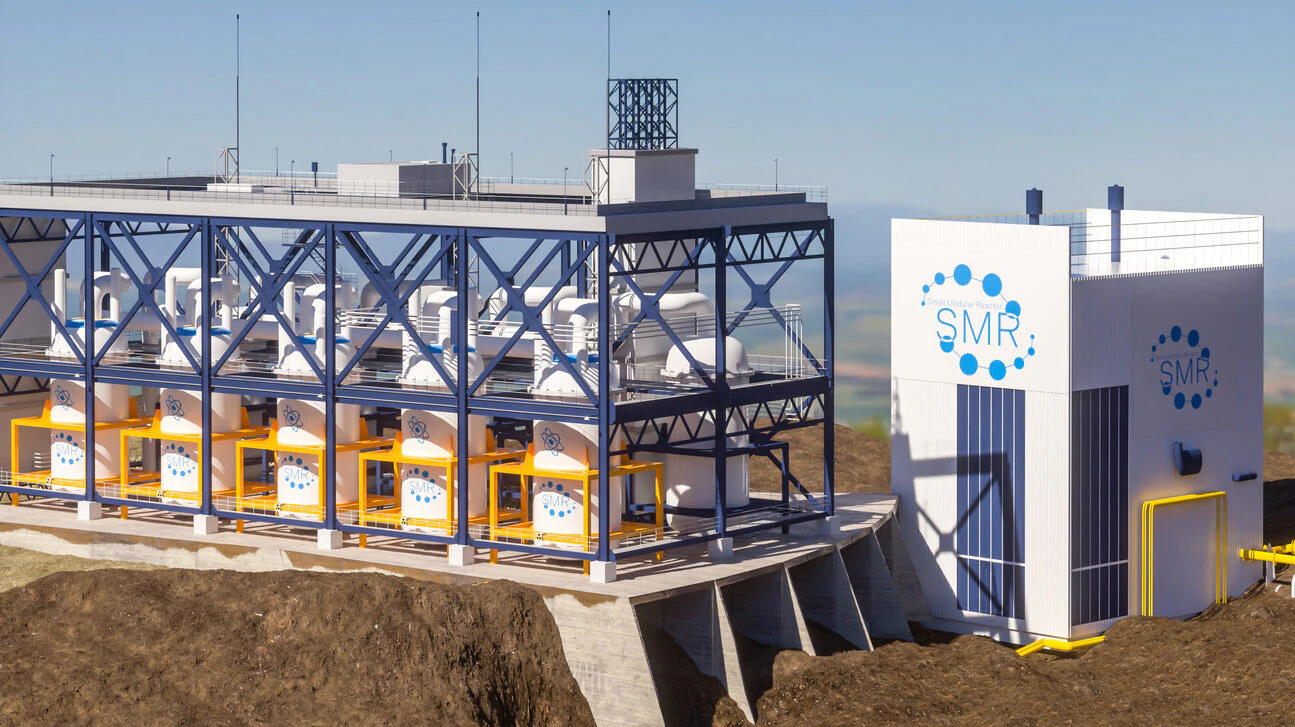
Russ Koehler, President of the Hawai‘i State Chapter of the Association of Energy Engineers, supported the amendment, noting that one form of nuclear technology in particular–small modular nuclear reactors (SMRs)--present a safe alternative to what people traditionally perceive as ‘nuclear power.’ “SMRs offer a promising alternative by providing a locally sourced, stable, and sustainable energy solution,” explained Koehler. “These reactors are designed to be compact, modular, and scalable, enabling island communities to meet their energy needs without dependence on external sources.”
To date, SMRs seem to the only remotely viable option for nuclear energy in Hawai‘i. SMR’s presently play a key part in the U.S. Department of Energy’s strategy to craft “safe, clean, and affordable nuclear power options.” While they have been touted as a future route for nuclear energy technology, its applicability to present-day conversations about renewable energy sources is uncertain.
For one, the technology is not commercially available. According to the U.S. Department of Energy’s Office of Nuclear Energy, “significant technology development and licensing risks remain in bringing advanced SMR designs to market and government support is required to achieve domestic deployment of SMRs by the late 2020s or early 2030s.” At least one study also suggests that SMRs may produce more nuclear waste than traditional nuclear reactors.
The debate over nuclear technology’s potential in Hawai‘i soon became a debate over SMRs. In their April 16 testimony before the House Committee on Consumer Protection, the Hawai‘i State Energy Office cautioned that SMRs could work in Hawai‘i, but the technology is presently at least a decade away from marketability in the islands. “As a technical matter, Small Modular Reactors (SMRs) would likely better match electricity demand needs given Hawai‘i’s grid size and geography compared to conventional nuclear reactors, which have a longer global operational history, Chief Energy Officer Mark Glick explained, “but are not likely well suited for Hawai‘i due to a variety of reasons.”
“Given the current lack of cost, production, safety, and nuclear waste management information on SMRs,” Glick said, “HSEO has no expectation that SMRs will be commercially available at cost-competitive prices for another decade and therefore believes the formation of a nuclear energy working group is premature.”
In spite of the barriers, the U.S. Department of Energy’s Office of Nuclear Energy continues to pursue SMRs as a viable option for the country’s nuclear future.
Hawai‘i’s Decarbonization Push
Nuclear energy is an awkward facet of the decarbonization conversation that Hawai‘i seems to have successfully avoided so far, perhaps to our own energy detriment.
Simply put, we’re scared to talk about nuclear energy.
Nuclear power is the energy bogeyman. When the State Energy Office authored a 300-page plus report on Hawai‘i’s decarbonization efforts (as required by a 2022 law), nary a word was brought to bear in the report on nuclear energy’s potential role.
Nuclear energy plays little to no part in conversations about alternative energy sources. In state law (see Hawai‘i Revised Statutes section 269-91), nuclear energy is not recognized as a renewable energy source. In its testimony on SCR 136, the State Energy Office further noted that it has been explicitly directed by the Green Administration to “conduct a full-scale analysis of every possible energy source, except nuclear, that can accelerate Hawai‘i’s transition away from fossil fuel dependence.”
The silence speaks. Nuclear energy is not an alternative option, solely as a matter of policy. Even if Hawai‘i ultimately finds that nuclear energy is not practical or necessary to meet our decarbonization goals, the sin of omitting nuclear energy is not fair. Nuclear opposition is not a good excuse for nuclear ignorance.
Contrary to what some may believe, Hawai‘i has never fully banned nuclear energy. Instead, it has installed barriers to the construction of nuclear fission plants. Article XI, Section Eight of the State Constitution is clear: “No nuclear fission power plant shall be constructed or radioactive material disposed of in the State without the prior approval by a two-thirds vote in each house of the legislature.”
Perhaps the 1978 Constitutional Convention, through this amendment, captures an enduring fear of nuclear energy. The legacy of nuclear weapons testing in Pacific, the political memory of the Three Mile Island incident, and the environmental disaster of Chernobyl all influence conversations about nuclear energy’s future.
The slow, seemingly distant development of SMRs is another barrier. “The truth is, SMRs simply are not viable,” notes Sherry Pollack of 350Hawai‘i, an environmental organization opposed to fossil fuels. “In a nutshell, SMRs are unproven, too expensive, too slow to build, have unresolved safety risks, and are too risky to play a significant role in the critical transitioning from fossil fuels that must occur in the coming 10-15 years.”
While resolutions are non-binding (they are not laws), they can still produce a basis for conversation. At the very least, Hawai‘i should socialize itself with the state of nuclear techologies like SMRs and why they may not be viable.
The Price of Progress
The debate over nuclear energy gets to a broader problem with grand goals and the practical routes required to achieve those goals.
It’s not a uniquely Hawai‘i problem, but Hawai‘i may be a natural example of the distance between political realities and political dreams. “A lot of progressives in my own party like to say we're for housing, we're for clean energy, we're for transit and infrastructure,” observed Hawai‘i’s U.S. Senator Brian Schatz on July 24. “But you can't be for something if you don't want it near you. If you're for housing, you’ve got to see the housing. If you're for clean energy, you're going to see a windmill or a wind farm or a nuclear power plant somewhere.”
It is a dynamic which often paralyzes progress here in Hawai‘i. We celebrate grand declarations like Hawai‘i commitment to 100% renewable energy sources by 2045, but struggle to balance this goal against the projected costs and trade-offs of these transitions. “As we envision a just and sustainable and wealthy country,” Schatz warns, “we have to actually make the things that make us more sustainable and wealthy.”
Energy renewability will carry a great cost. While we measure and debate the scope and scale of such cost, nuclear energy will linger in the background.
For the latest news of Hawai‘i, sign up here for our free Daily Edition newsletter!